
General Information:
Height: 7 inches
Weight: “8 to 10 pounds, and should not exceed 12 pounds”
Life Span: “10 to 15 years”
Coloring: Black, Black and Tan, Red, and Beige
Area of Origin: Belgium
Similar Breeds: Petit Griffon, Pug
History and Origin:
The Brussels Griffon has a fascinating history and story of origin. In fact there are three variations of this dog, the Brussels Griffon, Belgian Griffon and the Petit Brabancon – recognized by some as the same breed and others as three separate breeds. Either way the origin of the breed begins with a small, rough coated terrier (griffon) that was a ratter in the stables of Belgium.
Some 200 years ago some of these coachmen bred their griffons to imported toys such as the pug, the English Spaniel and the King Charles Spaniel. They also bred with a small German terrier and ended up with the Brussels Griffon, Petits Brabancon, Belgian Griffon. It is also believed that the Affenpinscher is an ancestor as well.
Originally the black coated Petits Brabancon was considered a breed fault but now is accepted along with the reds and tans of the Griffons. The three dogs are considered three different breeds in most standards while some consider them the same breed with variety of colors and coats. The coats are either rough or smooth.
Both the ordinary people and the noblemen in Belgium favored the Brussels Griffon and they were registered for the first time in 1883. Queen Marie Henriette fell in love with the breed and being a dog lover she encouraged her daughter to breed the Brussels Griffon. Through this the breed gained tremendous international exposure and popularity as she showed the breed anywhere there was a kennel club competition and in any country.
The breed expanded into England with a Brussels Griffon Club beginning in 1897 and the United States in 1945. However from 1945 on the breed suffered a serious decline. Following World War II it was very difficult to find many native Brussels Griffons in Belgium. The breed was saved by the devoted breeders and mostly United Kingdom breeders, as the Brussels Griffon was just getting a foothold in the United States.
The breed is still considered uncommon but there is more interest lately in the United States because of a general increase in interest in all the toys breeds. The Brussels Griffon is a sturdy and compact in size with both rough and smooth coated varieties. They have facial expressions that are very humanlike. The current day Brussels Griffon is a loyal dog with a very close bond with their people. They might be known as the “Velcro-dogs” as they are so attached to their people.
Personality and Temperament:
This feisty breed actually has a variety of temperaments and not just one. They can be extremely friendly or quietly reserved. They can be shy or totally self-assured. They can also be anything between these parameters. They are affectionate, playful, adaptable, and stubborn. As previously mentioned they are especially attached to their people and they do decide on a favorite in a family and attach themselves to that person.
The Brussels Griffon, though very playful, also take themselves very seriously. No matter what they are doing they are earnest about it and quite spunky. They will run the household if you let them and even if you don’t; they will believe they are doing so. They can be extremely comical and yet they are highly intelligent. It can take a lot of patience to live comfortably with a Brussels Griffon as they definitely have a mind of their own.
The breed is known for its stubbornness and sense of self-importance, and they are good watch dogs as well. They will bark anytime a strange dog or a strange person approaches their territory including their person. They are known to be softies when it comes to their people and they can be real snugglers. They get along well with other dogs if socialized and with children that do not tease them. They also get along with ferrets and cats. They are great companion dogs but do not care to be pampered like many toys. They are a tough breed that at times does not known how small they are. Again it is very important that they not be teased by children.
Finally in terms of personality, the Brussels Griffon is an accomplished escape artist. If you are going to put them in a fenced yard make sure it is solid and that your dog cannot climb over it or dig under it. It also must be tall as the Brussels Griffon can jump much higher than anyone would expect of a dog his size.
You also want to make sure he stays on the ground as much as possible, as they love to climb and they are extremely good at it. These are very athletic dogs but they could fall from too high up and get hurt. Since they are curious and stubborn, you need to make sure the environment you put them in does not allow them to hurt themselves.
Exercise & Training:
Training is critical for this self-assured and self-important breed. They can be difficult, stubborn and even obstinate. Leash training can be one of the most challenging and most frightening of tasks with a Brussels Griffon. If they do not want to do it and your are not patience and vigilant, not only will he leap and fling himself around, he can also free himself from a collar in this manner. A harness is much better for training a Brussels.
When training a Brussels Griffon puppy it is very important to socialize them when they are young and to train with positive reinforcement. They might appear to be tough but they have a sensitive side as well and can react poorly to negative corrections. They are very proud and if they feel they are being harshly corrected they will bristle.
As with so many of the toy breeds there is a challenge to housebreaking with the Brussels Griffon. Your puppy needs to be confined to certain parts of the home until they accomplish this training. Be patient with them and your efforts will be rewarded.
As far as exercise is concerned they will get plenty without a lot of effort from you. Though they love to play with their person, they are just as likely to play by themselves, tearing through the house for no apparent reason. Given this they do not require a tremendous amount of outside exercise or any amount of extensive exercise.
If you are interested this serious, intelligent and one person dog will excel at agility, conformation, fly ball, obedience and the new sport of barn hunt. If you are not interested in these activities than a daily walk will do in terms of the amount of exercise your Brussels Griffon will need from you.
Grooming:
As previously mentioned this breed comes in smooth and rough coats. The rough wiry coat does not shed much while the shorted smooth coat does shed more although neither is a really extreme shedder as dogs with double coats can be.
If you choose the rough coated Brussels Griffon the coat is dense and wiry, never silky, long or wooly. The harder the coat feels to your touch the better in respect to the standard. The rough coat will also be longer than the smooth coat, not shaggy but very different from the smooth. There will also be wiry hair on the Brussels Griffon’s head and it will be a little longer around the muzzle, eyes and chin – enough to form a beard or fringe.
On the other hand the smooth coated version of the breed will have shiny, tight, straight hair. There will not be any wiry hair anywhere on a smooth coated Brussels Griffon. The smooth coated version of this breed is the one that is the easiest to groom. This surprises many people but the smooth coated Brussels Griffon only needs to be brushed once a week and the coat will be shiny and clean. Both coats need shaping every three months.
The rough, wiry coat on the other hand needs to be stripped by hand three to four times a year if the wiry, rough texture is to be maintained. With the rough coated Brussels Griffon either you will have to pay a professional groomer to hand strip the coat or do it yourself. The professional will be quite expensive and it is time consuming to do it yourself and you would not want to do it wrong. Your other choice for a non-show dog is a schnauzer clip, but you will lose the roughness of the coat with this choice.
Some have claimed that the rough coated Brussels Griffon is hypoallergenic – meaning you cannot be allergic to it. In reality there are no hypoallergenic dogs but there are some that are less likely to activate allergies than others. If the rough coated Brussels Griffon is hand stripped three or four times a year they will be less likely to evoke that allergic response and it might be worth the time or expense to do so.
The other grooming issues are basic concerns such as trimming the nails about every three weeks and it is really important to brush their teeth. Toy dogs are more likely to contract periodontal disease, so this is especially important with the Brussels Griffon.
Health and Wellness:
It is always important if acquiring a puppy or a breed you have never had before, that you have some idea of the potential health issues that dog might inherit. Not all Brussels Griffons will contract all or any of these conditions but it is important to be prepared. It also is not possible to see all of these conditions in a puppy, but most would show up in genetic testing. If you are getting a puppy insist on proof and results of genetic testing of the parents and grandparents of the dog. This is true whether you are buying from a breeder or a pet store.
The Brussels Griffon is really a pretty healthy breed as their life expectancy of 12 to 15 years indicates. The problems that the Brussels Griffon does face include Syringomyelia. This is a condition of the spinal cord and is a neurological issue. They also might have Patella Luxation or dislocation of the knee cap, hip dysplasia and some common eye diseases such as Progressive Retinal Atrophy and cataracts.
Syringomyelia is a condition where a cavity or cyst appears in the spinal cord. With this congenital condition, it could be serious or not depending upon the location of the cyst and its growth over time. If the cyst expands and elongates it can destroy the spinal cord and the dog could become paralyzed. It is also possible that there would be stiffness, weakness and pain without progression to paralysis.
The most common condition seen in affected dogs is pain that is localized to the cervical spine and first felt by the dog after jumping. Thirty five percent of all dogs with Syringomyelia will eventually present with this symptom. Treatment cannot resolve the issue but can ease the pain. Analgesics and corticosteroids can lessen the severity of the condition. The eventual outcome depends on how severe the initial clinical signs are and if the dog responds to treatment. However if dogs are genetically tested before breeding, than those disposed to pass on this condition should not be bred.
Interesting Facts about the Brussels Griffon:
- The dog Verdell, in the Jack Nicholson film, As Good as It Gets, is played by six different Brussels Griffons – Jill the primary star and her understudies Timer, Debbie, Parfait, Sprout and Billy.
- In Southern California there is a brewery called The Bruery that makes a brown, sour ale called Griffon Bruxellois (Brussels Griffon).
- Within the breed there are a variety of sizes. In one litter there can be a six pound Brussels Griffon as well as a 20 pound dog.
Organizations dedicated to the Brussels Griffon:
Breeds Similar to Brussels Griffon Dogs:
-

- Shih Tzu
-
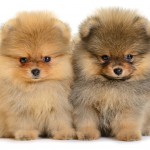
- Pomeranian
-

- Maltese