

When it comes to enriching your family with the companionship of a furry friend, it’s vital to consider Chihuahua socialization, especially in households with little ones. Known for their charming demeanor and petite size, Chihuahuas can become beloved members of your family, harmoniously coexisting with children and other pets when proper measures are taken. However, the path to this amiable relationship requires understanding, patience, and structured socializing efforts.
Your role as a pet parent involves more than just providing love and care; it also consists in ensuring the safety and welfare of your Chihuahua when they interact with the bubbly and unpredictable nature of children. Moreover, creating a positive framework for Chihuahua and other pets to interact can build a peaceful multi-pet household. Remember that your pint-sized canine will rely on you to set the tone for these interactions, always prioritizing their well-being and comfort.
Let’s explore together how to foster a nurturing environment for your Chihuahua, sharpening your insight into their unique needs and how to best integrate them into a family setting that might include children and other four-legged friends.
Key Takeaways
- Understand the dynamics of Chihuahua socialization for a harmonious family environment.
- Recognize the importance of gentle, respectful interactions between Chihuahuas and children.
- Learn the significance of supervised integration of Chihuahuas with other family pets.
- Adopt strategies to manage the Chihuahua’s interactions with unfamiliar guests, especially children.
- Emphasize the need for a safe and stress-free retreat space for your Chihuahua.
- Acknowledge the commitment necessary for teaching both children and pets to coexist peacefully.
Understanding the Chihuahua Temperament
Small in size but large in personality, the Chihuahua temperament often surprises those unfamiliar with the breed. Though they may stand only a few inches tall, these dogs carry a presence fueled by devotion and a spirited zest for life. Folklore suggests the Chihuahua’s ancestors held significant roles in ancient civilizations, and indeed, that nobility appears to have trickled down to the modern Chihuahua, manifesting in their loyalty to their owners.
Contrary to the belief that Chihuahuas are aggressive, their occasional sassiness usually stems from an instinctive desire to protect themselves and their humans. It is a misinterpretation of their reactive behavior, which springs from a place of cautiousness rather than malicious intent. This reaction towards strangers, just as with any dog, can be mitigated through socializing your Chihuahua properly.
It’s essential for potential Chihuahua owners to realize that despite effective socialization, expecting a Chihuahua to fully embrace every new person and situation might not be realistic. They are selectively sociable and develop strong bonds with family, while they may merely tolerate guests. Acknowledging and respecting these innate preferences is key to fostering a nurturing and stress-free environment for your Chihuahua.
- Be patient: Socializing a Chihuahua requires a commitment to consistent and patient training.
- Create positive experiences: Introduce new experiences and people in a positive, controlled environment to build trust.
- Understand boundaries: Recognizing a chihuahua’s threshold for stimulation can help avoid situations that may provoke anxiety or defensive behavior.
Ultimately, integrating a Chihuahua into your family milieu with children or other pets means being vigilant about their small stature and sensitive nature. Your role in socializing your Chihuahua invites a shared responsibility, shaping their interactions with the world and safeguarding their well-being amidst their spirited character.
Is Your Household Right for a Chihuahua?
Ensuring your household is a suitable match for a Chihuahua goes beyond a love for their pint-sized charm. These tiny companions thrive in environments that understand their needs and quirks. Socializing your Chihuahua and ensuring compatible interactions with children and other pets form the cornerstone of a harmonious home life with a Chihuahua.
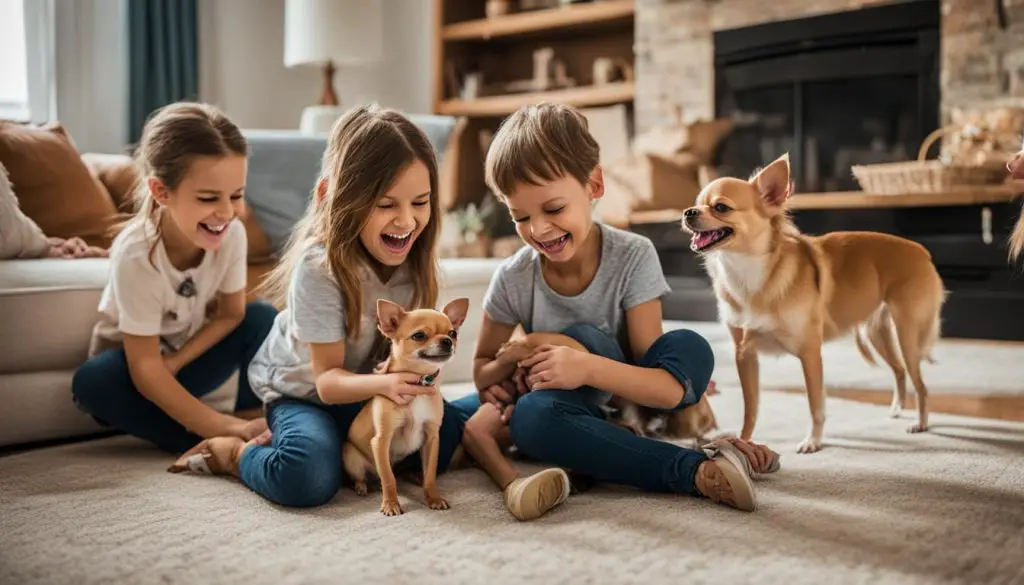
Assessing Your Family’s Compatibility with Chihuahuas
A Chihuahua’s well-being in a family setting hinges on the mutual respect between the dog and all family members. Due to their delicate size, families with very young children might reconsider as a toddler’s unpredictable behavior could result in inadvertent injury. Families with older children are often a better match as they can comprehend and adhere to the precautions necessary for a tiny pet’s safety. Observing your family dynamic and the daily routines will help you assess if your environment aligns with a Chihuahua’s disposition.
Teaching Children About Handling Small Dog Breeds
In households where both Chihuahuas and children coexist, it’s critical to teach children the proper way to handle and respect small breeds. This includes demonstrating gentle petting, understanding a dog’s personal space, and recognizing signs of discomfort. Encouraging supervised interaction can be a powerful learning opportunity while safeguarding the welfare of both your child and the Chihuahua.
Recognizing a Chihuahua’s Need for a Cautious Environment
Creating a safe and calm atmosphere contributes significantly to the comfort and security of your Chihuahua. Providing retreat spaces away from high activity areas can prevent a stressed or agitated response from your pet. Developing an understanding of the Chihuahua and other pets in your home will inform how to facilitate friendly relations or when it’s best to keep them separate for everyone’s peace of mind.
| Consideration | Impact on Chihuahua | Impact on Children |
|---|---|---|
| Energy levels of household | High energy can be overwhelming | May need to learn moderation and calmness |
| Understanding of Chihuahua’s size | Essential for preventing injuries | Teaches responsibility and careful handling |
| Presence of other pets | Requires safe and controlled introductions | Opportunity to learn about multi-pet dynamics |
| Children’s age and maturity | Affects ability to establish trust and bond | May dictate level of direct interaction |
Conscientiously considering these factors in relation to a Chihuahua can guide you towards creating a nurturing environment for all. Whether it’s adjusting the household’s energy, educating children on the importance of gentle interactions, or managing the dynamic with other pets, the goal remains to cultivate a household where Chihuahuas with children coexist in mutual respect and affection.
Chihuahua Socialization
Getting to know your pint-sized companion entails much more than just cuddles and treats. Socializing your Chihuahua stands as a pivotal part of their developmental journey. Whether they’re romping around as rambunctious puppies or navigating life as reserved adults, Chihuahuas need a blend of gentle guidance and positive experiences to foster their social skills, particularly with children and other household pets.

The foundation for a socially adept Chihuahua begins early in life, with the prime window for socializing your Chihuahua falling between 8 and 16 weeks. During this critical period of development, introducing them to a variety of well-behaved children and friendly pets can set the stage for future positive interactions. It’s a process that not only involves exposure to different beings but also acclimating them to the unpredictable movements and sounds especially exuded by mini humans.
Remember, it’s about creating associations with the good bits in life: Praise your pup with treats when they display confidence around children or show complacency with the family cat. Timing and tone matter—keep it light and rewarding.
- Commence introductions in controlled environments to maintain safety.
- Incorporate Chihuahua and other pets’ interaction slowly, respecting their comfort and alertness.
- Employ consistent commands and cues for reliable responses amidst youthful chaos.
For adult Chihuahuas new to the social scene, the approach is more nuanced—think slow and steady. A measured intro, layered with ample praise for their bravery, encourages them to inch out of their shells. Recognize their apprehension and reward their patience; a peaceful coexistence with rambunctious kids and other pets can certainly be cultivated.
Your role as a guide in this symphony of social encounters is clear—striking the right note with your Chihuahua is a symphony composed of patience, practice, and a deep understanding of their petite perspectives. So, take the lead in socializing your Chihuahua, and watch them waltz gracefully into the social fabric of your family life.
Creating a Safe Space for Chihuahuas and Kids
In the shared journey of pet ownership and parenthood, crafting a safe environment for Chihuahuas with children is paramount. This balanced ecosystem within your home is key to nurturing a positive relationship between your furry friend and the younger members of your household. With these objectives in mind, let’s delve into strategies that will promote a tranquil space for your Chihuahua, endorsing serene interactions with the children in your life.
Training Kids on How to Interact with Chihuahuas
Education is the first step towards ensuring harmonious encounters between your Chihuahua and kids. Begin by illustrating to children how to approach the dog with gentleness, signaling that sudden moves or loud noises can be intimidating for such a petite animal. Socializing your Chihuahua also involves teaching children to recognize the signs when the dog is seeking tranquility or feeling anxious. It’s about instilling a mindset where respect for the dog’s comfort zone becomes second nature to your kids.
Importance of Supervised Play between Chihuahuas and Children
Every play session between your Chihuahua and children should come under the watchful eye of an adult. This not only ensures the safety of both but also provides an opportunity to guide interactions in real time. Supervised play allows you to interpret the dog’s body language and the children’s behavior, stepping in when necessary to prevent miscommunication that could lead to stress or harm. It’s a way to model positive behaviors that, with time, children can adopt independently.
Designating Safe Zones for Chihuahuas at Home
To truly foster a stress-free ambiance for your Chihuahua, it’s essential to assign specific areas within your home as safe zones. These nooks serve as sanctuaries where your Chihuahua can unwind from the hustle and bustle of family life. Whether it’s a comfy crate or a special corner in a quiet room, these sanctuaries allow your Chihuahua to engage or retreat according to their comfort level, significantly minimizing the potential for anxiety or defensive reactions. It’s in these safe spaces that your Chihuahua can enjoy the peace it needs while still being a cherished part of your bustling home.
FAQ
How should I introduce my Chihuahua to my children?
Introduce your Chihuahua to your children gradually, in a calm and controlled environment. Teach your children to approach the dog gently, avoiding sudden movements and loud noises that could startle the Chihuahua. Encourage your children to offer treats, letting the dog approach them on their own terms to create a positive association.
Are Chihuahuas good with other pets?
Chihuahuas can coexist peacefully with other pets, but introductions should be made carefully. Ensure that other pets are well-behaved and won’t harm the Chihuahua. Supervise initial interactions closely and continue to monitor their relationship as your pets get to know each other.
Can a Chihuahua’s sassy temperament be managed?
Yes, while Chihuahuas are known for their spirited personality, with consistent training and proper socialization, you can manage their temperament. Establishing yourself as the pack leader and using positive reinforcement techniques can help curb undesirable behaviors.
What age is best to start socializing a Chihuahua?
The critical period for socialization in Chihuahuas is between 8 and 16 weeks of age. This is when they are most receptive to new experiences. However, adult Chihuahuas can also be socialized with more gradual and gentle introductions.
How do I teach my children to handle a small dog breed like the Chihuahua safely?
Educate your children on how fragile small dog breeds can be. Teach them to pet the dog gently, never to pick up the dog without supervision, and to always be aware of the dog’s presence to avoid accidental injury. Show them how the dog communicates discomfort and ensure they respect the dog’s space and signals.
Why is it important to have a cautious environment for a Chihuahua?
Owing to their small size, Chihuahuas can be easily injured or overwhelmed. A cautious environment minimizes the risk of accidents and provides a serene atmosphere for your Chihuahua to feel safe and secure, particularly important when they are not keen on being in the midst of high activity levels.
How important is supervised play between children and Chihuahuas?
Supervised play is crucial when children interact with Chihuahuas. It ensures that children treat the dog respectfully and gently, and it helps to prevent any accidental injuries to the small dog. Constant supervision allows you to intervene if play becomes too rough or if the Chihuahua becomes stressed.
What are safe zones, and how do they benefit my Chihuahua?
Safe zones are designated areas in your home where your Chihuahua can retreat to when they want to be alone or are feeling overwhelmed. These areas, such as a crate or a bed in a quiet room, are off-limits to children and other pets. They provide the dog with a sense of security and autonomy over their environment.
How can I address my Chihuahua’s cautiousness around strangers?
To help your Chihuahua become more comfortable around strangers, work on gradually exposing them to new people in a controlled manner. Use positive reinforcement, like treats and praise, to create positive associations. Remember that some Chihuahuas may always be wary of strangers, and it’s important to respect their comfort zone.
What training commands are useful for Chihuahuas when living with children?
Basic commands such as “sit,” “stay,” “come,” and “leave it” are essential for every dog and can be particularly helpful for Chihuahuas living with children. These commands can ensure the dog remains controlled and can help prevent situations where they might feel threatened or overwhelmed by the exuberance of young family members.