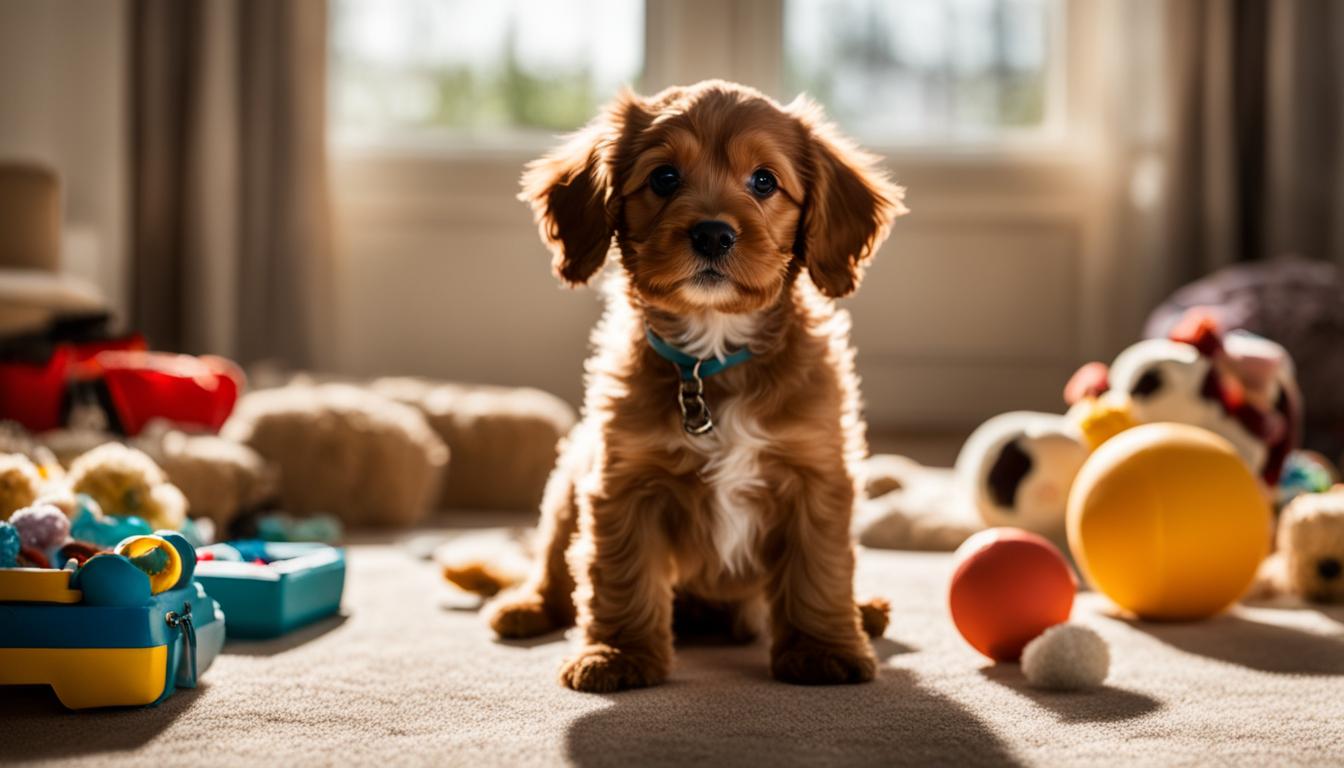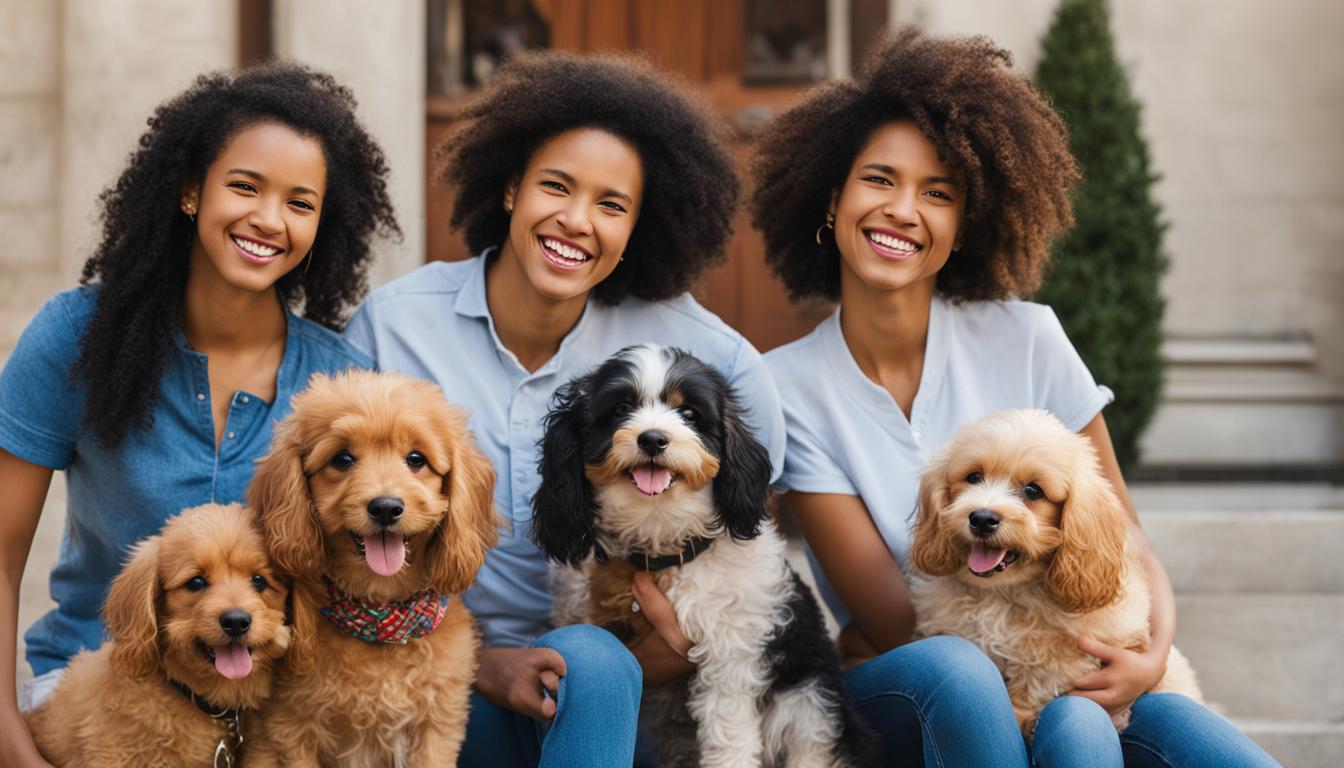

Understanding a Cavapoo’s behavior and temperament is essential for any prospective Cavapoo parent. These adorable furry companions have a unique blend of traits inherited from their parent breeds, the Cavalier King Charles Spaniel and the Poodle. In this comprehensive guide, we will explore the fascinating world of Cavapoo behavior, helping you understand your puppy better and establish a strong bond with them.
Key Takeaways:
- Understanding your Cavapoo’s behavior is crucial for a successful companionship.
- Cavapoos have a blend of traits from their Cavalier King Charles Spaniel and Poodle parent breeds.
- Observing body language can provide insights into your Cavapoo’s happiness and well-being.
- Positive training, socialization, and a nurturing environment are key to raising a well-behaved Cavapoo.
- Each Cavapoo is unique, so be patient and enjoy the joyful moments with your furry friend.
What is the Cavapoo Temperament Like?
The Cavapoo is a delightful breed with a unique temperament influenced by its genetic makeup. As a crossbreed between the Cavalier King Charles Spaniel and the Poodle, the Cavapoo inherits traits from both parent breeds, resulting in a charming and well-rounded disposition.
Cavalier King Charles Spaniels are known for their gentle and affectionate nature, while Poodles are highly trainable and alert. When combined, these qualities give the Cavapoo its distinct temperament.
Cavapoos are generally sociable and loving, making them ideal companions for families and individuals alike. Their intelligence allows them to quickly learn commands and tricks, making training a joyful and rewarding experience. Additionally, their flexible nature enables them to adapt well to various lifestyles and environments.
One of the outstanding traits of Cavapoos is their innate desire to please their owners. They thrive on human companionship and are known for their loyalty and devotion. This makes them excellent therapy dogs and emotional support animals.
While genetics play a significant role in defining a Cavapoo’s behavior, it’s important to note that other factors, such as upbringing and environment, also contribute to their temperament. Proper socialization from an early age and positive reinforcement training are crucial in shaping their behavior and ensuring they grow into well-behaved and well-adjusted companions.
“The combination of the Cavalier King Charles Spaniel’s gentle nature and the Poodle’s trainability results in a Cavapoo with a sociable, loving, and highly adaptable temperament.”
Key Personality Traits of Cavapoos:
- Sociable and friendly with people and other animals
- Loving and affectionate towards their owners
- Intelligent and quick learners
- Flexible and adaptable to different environments
- Eager to please, making training sessions enjoyable and productive
It’s essential to understand these inherent traits when considering a Cavapoo as a pet. Meeting their social, mental, and physical needs will result in a happy and well-balanced Cavapoo.
In the next section, we will explore how to determine if your Cavapoo is happy and content, providing insight into their emotional well-being.
How Do I Know if My Cavapoo is Happy?
Determining if your Cavapoo is content involves observing their behavior and body language. Signs of a happy Cavapoo include a raised and wagging tail, relaxed ears, relaxed body posture, playful behavior, and seeking physical affection. Cavapoos are generally known for their cheerful and joyful disposition.

| Signs of a Happy Cavapoo |
|---|
| Raised and wagging tail |
| Relaxed ears |
| Relaxed body posture |
| Playful behavior |
| Seeking physical affection |
When your Cavapoo is happy, you’ll notice their tail held high and wagging. Their ears will be relaxed, not pinned back or forcefully forward. A happy Cavapoo will have a relaxed body posture, which indicates they’re at ease in their environment. They may exhibit playful behavior, such as bounding around, chasing toys, or engaging in joyful zoomies. Additionally, they may actively seek physical affection from you, nudging you for attention or leaning into your touch.
It’s important to understand the signs of a happy Cavapoo, as they indicate their overall well-being and contentment. However, remember that every Cavapoo is unique, and their happiness may be expressed differently. Pay attention to your individual Cavapoo’s behavior and body language to get to know them better and strengthen the bond between you.
Typical Cavapoo Temperament Traits
Cavapoos are adored for their distinctive temperament traits inherited from their parent breeds. These traits include:
- Affectionate: Cavapoos are known for their loving and cuddly nature. They thrive on human companionship and enjoy being part of the family.
- Intelligent: With a mix of Cavalier King Charles Spaniel and Poodle intelligence, Cavapoos are quick to learn and can excel in training. Their intelligence makes them easy to teach and eager to please.
- Playful: Cavapoos have a fun-loving and playful personality. They enjoy interactive games, toys, and activities that keep them mentally and physically stimulated.
- Social: Cavapoos are generally social dogs who get along well with people of all ages and other pets. They thrive in a social environment and enjoy meeting new people and furry friends.
- Adaptable: Cavapoos can adapt well to different living situations, whether it’s a small apartment or a large house. They are flexible in their environment and can adjust to various lifestyles.
- Balanced Energy Levels: Cavapoos have a good balance of energy levels. They can be playful and energetic during playtime but also know how to relax and cuddle with their owners.
While recognizing the positive temperament traits of Cavapoos, it’s important to be mindful of potential negative traits as well:
- Separation Anxiety: Cavapoos can be prone to separation anxiety and may exhibit distress when left alone for long periods. This trait highlights the need for proper training and gradual alone-time exposure.
- Grooming Requirements: Because of their Poodle heritage, Cavapoos may have curly or wavy fur that requires regular grooming. This includes brushing, bathing, and regular visits to the groomer.
- Potential for Excessive Barking: Cavapoos may have a tendency to bark excessively if not properly trained and socialized. Consistent training can help manage their barking tendencies.
- High Energy: While Cavapoos have a balanced energy level, they still require regular exercise and mental stimulation to prevent destructive behaviors.
- Stubbornness: Some Cavapoos may exhibit stubborn behavior from time to time. Patient and consistent training methods can help overcome any stubborn tendencies.
- Health Issues: Like any other breed, Cavapoos may be prone to certain health conditions, such as hip dysplasia, ear infections, or heart issues. Regular vet check-ups are crucial for maintaining their overall health and well-being.
- Noise Sensitivity: Cavapoos may be sensitive to loud noises, which could cause them to become anxious or stressed. Creating a calm and secure environment can help alleviate their noise sensitivity.
Providing proper training, socialization, and a nurturing environment can help manage and mitigate these potential negative traits, ensuring a happy and well-behaved Cavapoo.
Conclusion
The Cavapoo is a delightful breed that possesses a charming temperament. To ensure a strong bond and well-behaved Cavapoo, it is crucial to understand and appreciate their behavior and temperament. By taking into account their genetic heritage, providing proper training and socialization, and creating a nurturing and positive environment, you can raise a happy, confident, and well-adjusted Cavapoo companion.
Remember, each Cavapoo is unique, with their individual personality traits. Patience, consistency, and a readiness for joyful moments with your furry friend are key. Refer to the Cavapoo Behavior Guide to find valuable insights into understanding their temperament and behavior patterns. With these training tips for Cavapoo puppies, you can establish a strong foundation for a lifelong companionship with your Cavapoo.
Understanding Cavapoo puppy behavior is crucial in fostering their development. With the right approach, training, and love, you can guide your Cavapoo towards a happy and well-adjusted life. By being vigilant and observant, you’ll be able to recognize and address any behavioral challenges that may arise, ensuring a harmonious relationship with your beloved Cavapoo.
FAQ
What factors influence a Cavapoo’s behavior and temperament?
A Cavapoo’s behavior and temperament are influenced by its genetic makeup, upbringing, and environment.
What are the signs of a happy Cavapoo?
Signs of a happy Cavapoo include a raised and wagging tail, relaxed ears, relaxed body posture, playful behavior, and seeking physical affection.
What are the positive temperament traits of a Cavapoo?
Positive temperament traits of a Cavapoo include being affectionate, intelligent, playful, social, adaptable, and having balanced energy levels.
Are there any potential negative traits of a Cavapoo’s temperament?
Yes, potential negative traits of a Cavapoo’s temperament can include separation anxiety, grooming requirements, potential for excessive barking, high energy, stubbornness, health issues, and noise sensitivity.
How can I ensure my Cavapoo grows up to be well-behaved?
Providing proper training, socialization, and creating a loving and positive environment are key to raising a well-behaved Cavapoo.