

 If you are a German Shepherd owner or considering becoming one, it’s essential to understand how their growth and size are influenced by various factors. In this comprehensive guide, we will provide you with a detailed understanding of German Shepherd size, growth rate, and dimensions.
Key Takeaways
- German Shepherds are known for their impressive size and can reach heights of up to 26 inches and weights of up to 95 pounds.
- Factors such as genetics, nutrition, exercise, and overall health can influence the size and growth rate of German Shepherds.
- German Shepherds go through different growth stages, and it’s essential to monitor their growth to ensure their overall well-being.
- If you notice abnormal size or growth concerns, consult with your veterinarian to devise an appropriate treatment plan.
- Supporting your German Shepherd’s optimal growth and overall health requires a combination of proper nutrition, exercise, veterinary care, and lifestyle choices.
Understanding the Average Size of German Shepherds
German Shepherds are impressive dogs admired for their size and strength. When fully grown, they are a medium to large-sized breed with a muscular build. Keep reading to learn more about the typical dimensions of adult German Shepherds, including their height and weight.
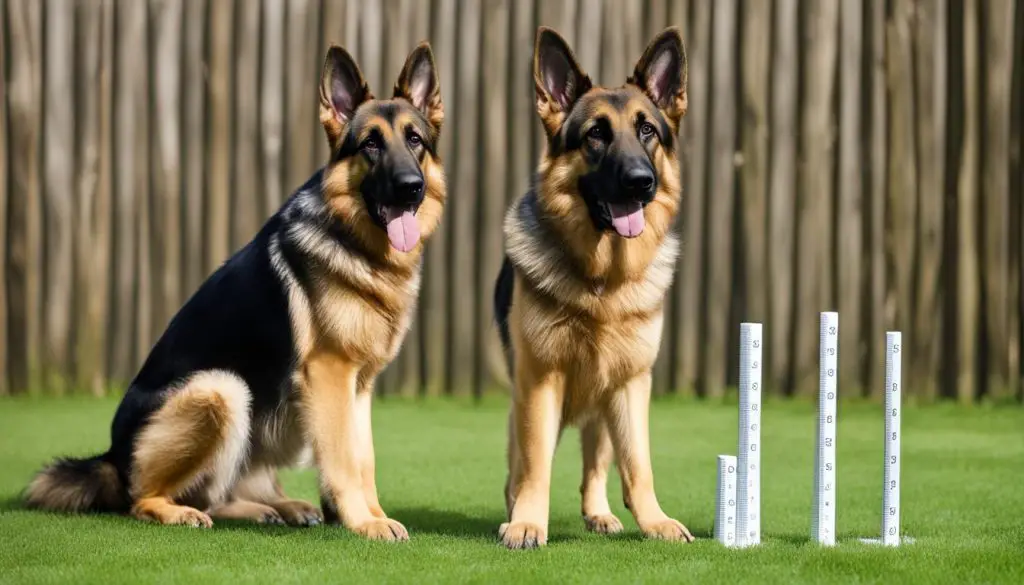
On average, male German Shepherds stand between 24-26 inches at the shoulder, while females stand between 22-24 inches. Their weight ranges from 50-90 pounds for males and 40-70 pounds for females. However, exceptions occur where an adult German Shepherd may exceed these dimensions resulting in oversized dogs.
The dimensions of German Shepherds can vary depending on various factors such as genetics, sex, and nutrition. To determine if your German Shepherd is within the average size range, you can consult their veterinarian for a more accurate reading.
Size Comparison Chart
For a visual representation, the chart below shows a comparison of the average size range between male and female German Shepherds and some other similar breeds:
| Breed | Average Male Size (in inches) | Average Female Size (in inches) | Average Male Weight (in pounds) | Average Female Weight (in pounds) |
|---|---|---|---|---|
| German Shepherd | 24-26 | 22-24 | 50-90 | 40-70 |
| Belgian Malinois | 22-26 | 22-24 | 55-75 | 45-60 |
| Dutch Shepherd | 22-25 | 21-23 | 50-75 | 40-65 |
| Doberman Pinscher | 26-28 | 24-26 | 75-100 | 60-90 |
Note: These are approximate size ranges as each dog may differ in size depending on various influences such as genetics, nutrition, and overall health.
It’s important to monitor the growth and size of your German Shepherd to ensure they are healthy and reaching their optimal size.
“German Shepherds are known for their impressive size.”
Factors Influencing German Shepherd Size
The size of your German Shepherd is not just determined by genetics; it can be influenced by various other factors as well. As a responsible dog owner, it’s essential to understand these influences to manage your German Shepherd’s growth and ensure they achieve their optimal size and weight range.
Genetics
As with other dog breeds, genetics plays a significant role in determining the size and dimensions of a German Shepherd. The size of the parents and their bloodlines can impact the size of their offspring. Although it’s not a guarantor, doing research and choosing reputable breeders that focus on producing standard-sized German Shepherds will increase the likelihood your dog will be within average size ranges.
Nutrition
Your German Shepherd’s nutrition is critical to their overall health and wellbeing. The quality, quantity, and frequency of their meals can impact their growth rate and size. Provide your German Shepherd with a balanced, high-protein diet specifically designed to cater to its size and activity level. Any dietary adjustments or additions must be carefully considered, and you should always consult with your veterinarian before changing their diet.
Exercise
Regular exercise and activity can be beneficial for your dog’s growth, both physically and mentally. However, over-exercising or excessive stress on their joints can lead to stunted growth and uneven development. Your German Shepherd’s exercise plans should take their growth rate and size into account, ensuring they get enough physical activity without causing damage or other medical conditions.
Overall Health
Good overall health is essential for any dog breed, including German Shepherds. Apart from the genetic and nutritional factors mentioned above, their health can also be impacted by environmental factors. Maintaining a clean, healthy living environment, regular vet check-ups, and vaccinations can help ensure your German Shepherd maintains good health and optimal growth.
“Managing your German Shepherd’s size is not just about controlling their growth; it’s about ensuring they are healthy and happy.”
Understanding and managing the factors influencing your German Shepherd’s size and growth rate can help you make informed decisions as a responsible pet owner. By paying attention to their nutrition, exercise, health, genetics, and overall size, you can help your German Shepherd reach its optimal size and weight range and lead a healthy and fulfilling life.
Growth Stages of German Shepherds
German Shepherds are among the largest dog breeds and can grow rapidly during their first year of life. It’s important to understand their growth stages and milestones so that you can ensure proper development and monitor any abnormalities.
German Shepherd Size and Growth Guide
Growth Stages of German Shepherds
German Shepherds go through several distinct growth stages, and each has its unique characteristics and milestones. Knowing what to expect at each stage can help you manage their growth and ensure your dog is growing at a healthy rate.
| Growth Stage | Age | Description |
|---|---|---|
| Puppy | 0-6 months | During this time, German Shepherds experience the most significant period of growth. Their weight and height can double or even triple in just a few months. |
| Adolescent | 6-18 months | This stage is characterized by a slower rate of growth, but still very active. Adulthood will bring gradual growth to optimal size and strength. |
| Adult | 12-24 months | German Shepherds typically attain their full size by two years old, with variations within the breed. |
Keep in mind that these stages are merely a guide, with each dog developing at different rates. Factors such as genetics, nutrition, and physical activity also play a critical role in your dog’s growth rate.
During puppyhood, it’s essential to monitor your German Shepherd’s growth, as this is the time when rapid growth occurs. Ensure they receive a balanced diet, according to their specific needs. In the adolescent stage, keep up with regular visits to the vet for well-being check-ups, and monitor their nutrition and diet carefully. Adult German Shepherds require a combination of regular exercise, preventive care, and healthy lifestyle choices to maintain optimal health and ideal weight range. Proper care and attention will ensure your German Shepherd achieves its full potential for size and strength.
Monitoring Your German Shepherd’s Growth
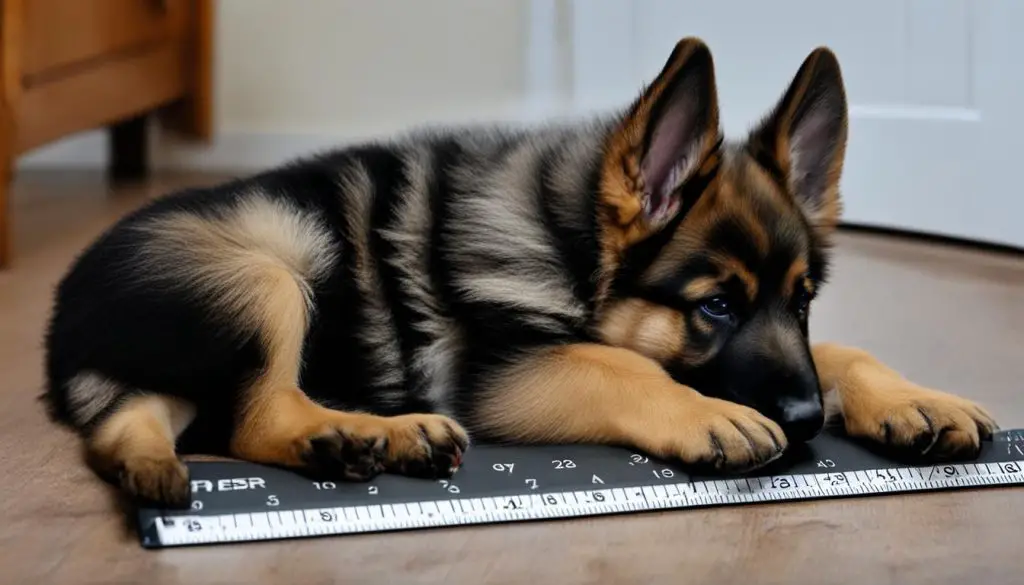
Regular monitoring of your German Shepherd’s growth is crucial for their overall well-being. By tracking their growth rate and dimensions, you can ensure they are developing correctly and can detect any potential health concerns. Here are some practical tips on how to measure and track your German Shepherd’s growth:
- Invest in a high-quality scale that can accurately measure your dog’s weight. Weigh your German Shepherd on a weekly basis and keep a record of their weight in a journal or spreadsheet. This will help you keep track of any fluctuations and help you spot any potential issues.
- Measure your German Shepherd’s height regularly. You can do this with a measuring tape or with a height chart designed for dogs. Measure from their shoulder blades to the ground and record their height in your tracking journal or spreadsheet.
- Take note of any changes in your dog’s appetite or energy levels. Sudden changes in behavior can indicate an underlying health issue.
As your German Shepherd grows and develops, it is essential to know what to expect during each growth stage. Refer to the growth chart below for an idea of when your dog will reach critical milestones and what their dimensions should be.
Remember, every dog is unique, so your German Shepherd’s size and growth rate may differ from the average. If you are concerned about their growth or any other health issues, consult your veterinarian.
Abnormal Size and Growth Concerns
Although German Shepherds are generally known for their predictable size and growth rate, there are some concerns that you need to be aware of that can lead to abnormal growth patterns or sizing. If you notice any of these concerns, it’s best to consult your veterinarian immediately to rule out any underlying medical conditions.
Stunted Growth
If your German Shepherd puppy is not growing as expected, this could be a sign of stunted growth caused by nutritional deficiencies or genetic abnormalities.
A German Shepherd puppy’s growth can be stunted by insufficient nutrition, lack of exercise, poor quality food, or underlying medical conditions.
Oversized German Shepherds
German Shepherds that are larger than the typical size range may be due to genetics or overfeeding during the puppyhood stage. However, large German Shepherds may be at risk of developing health complications such as joint and bone problems.
Medical Conditions
There are certain medical conditions that can impact the size and growth of German Shepherds. For example, hypothyroidism, a common condition in dogs, can cause stunted growth or excessive weight gain in German Shepherds.
To help your German Shepherd grow and maintain a healthy size range, it’s important to provide them with a balanced diet, regular exercise, and proper veterinary care. However, keep in mind that both underfeeding and overfeeding can lead to abnormal growth patterns, so it’s essential to consult your vet to ensure your German Shepherd’s growth is on track.
Achieving Optimal Size and Health in German Shepherds
German Shepherds have a size and growth rate that varies depending on many factors such as genetics, nutrition, exercise, and overall health. To ensure your German Shepherd reaches its optimal size and enjoys good health, you need to take care of all aspects of its well-being.
Nutrition
Feeding your German Shepherd with a balanced and wholesome diet is crucial in achieving optimal growth and maintaining good health. Puppies need more frequent feeding than adult dogs but should be given smaller portions. Monitor your dog’s weight and adjust its diet accordingly as it grows. Your dog’s diet should contain adequate proteins, vitamins, and minerals for optimal growth and repair of tissues. Consult a veterinarian for specific dietary needs based on your dog’s age, size, and activity levels.
Exercise
Regular exercise is essential for your German Shepherd’s physical and mental health. A lack of activity can lead to obesity, which in turn can cause several health problems. Engage your dog in daily activities such as walks, runs, or playing games that challenge its physical abilities. Ensure that the exercise routine is tailored to your dog’s age and size to avoid overexertion or injury.
Veterinary Care
Regular veterinary check-ups are essential in detecting any health issues that may affect your German Shepherd’s growth and overall well-being. As part of the care regimen, it’s essential to safeguard your dog against parasites and diseases such as heartworm, flea infestations, and rabies. Maintain an updated vaccination schedule and consult your veterinarian regarding any health concerns.
Lifestyle Choices
Your dog’s environment and lifestyle can also affect its growth and development. Ensure that your German Shepherd has adequate space, comfort, and safety in its living quarters. Avoid exposing it to extreme temperatures and don’t leave it in a hot car. Monitor your dog’s socialization and training to ensure it lives a happy and stress-free life. Proper grooming is also necessary to maintain a healthy coat and avoid skin infections.
By providing adequate nutrition, regular exercise, veterinary care, and a healthy lifestyle, you can help your German Shepherd reach its optimal size and lead a happy and healthy life.
Conclusion
Congratulations on completing this comprehensive guide on the size and growth of German Shepherds. By now, you should have a good understanding of the factors that influence their dimensions, including genetics, nutrition, exercise, and overall health.
Remember that German Shepherds come in a range of sizes, and it is essential to monitor your dog’s growth to ensure they are within the average weight and height range. Regular veterinary check-ups and monitoring of their diet and exercise can help in achieving optimal size and health.
By implementing appropriate strategies and seeking veterinary care when needed, you can ensure your German Shepherd has the best chance of leading a healthy and happy life. We hope this guide has been informative and helpful for you as a German Shepherd owner.
FAQ
What is the average size of a German Shepherd?
On average, adult German Shepherds stand between 22 and 26 inches tall at the shoulder and weigh between 50 and 90 pounds. However, it is important to note that there can be variations in size within the breed.
How can I determine if my German Shepherd is within the average size range?
The best way to determine if your German Shepherd is within the average size range is to observe their height and weight in comparison to the averages mentioned earlier. Regular veterinary check-ups can also be helpful in monitoring your dog’s growth and size.
What factors can influence the size of a German Shepherd?
The size of a German Shepherd can be influenced by genetics, nutrition, exercise, and overall health. Good genetics, a balanced diet, proper exercise, and regular veterinary care can all contribute to proper growth and development.
How does a German Shepherd grow from a puppy to an adult?
German Shepherds go through different growth stages, with the most rapid growth occurring in their first year. They will gradually reach their adult size, both in terms of height and weight, typically around 12-18 months of age.
How can I monitor my German Shepherd’s growth?
To monitor your German Shepherd’s growth, you can measure their height at the shoulder and regularly weigh them. Keep track of these measurements over time to ensure they are within the expected range for their age and breed. Your veterinarian can also provide guidance and support in monitoring your dog’s growth.
What are some concerns regarding the size and growth of German Shepherds?
While German Shepherds generally follow a predictable growth pattern, there can be instances of stunted growth, oversized dogs, or medical conditions that may impact their size. If you have any concerns about your German Shepherd’s growth, it is always best to consult with your veterinarian.
How can I support my German Shepherd’s optimal growth and health?
To support your German Shepherd’s optimal growth and health, provide them with a balanced and nutritious diet, ensure they get regular exercise, maintain their overall well-being through routine veterinary care, and create a suitable living environment that meets their needs. Consulting with a professional, such as a veterinarian or dog trainer, can provide you with specific guidance tailored to your German Shepherd’s needs.