

What is a Shepadoodle?
A Shepadoodle is a cross between a German Shepherd and a Standard Poodle or any mixture containing those two breeds. They are large, intelligent, active, and very task-oriented.
QUICK FACTS ABOUT SHEPADOODLES*
| General | Breed Group | Herding |
| Type | Hybrid, Mixed-breed | |
| Recognized By | DBR (Designer Breed Registry) IDCR (International Designer Canine Registry) |
|
| Life Expectancy | Less than 13 years | |
| Physical | Size | 22-28 inches |
| Weight | 50-90 pounds | |
| Fur Length | Medium to long | |
| Fur Type | Wiry, wavy, or curly | |
| Ear Shape | Floppy | |
| Color | Black, brown, cream, gray, white and mixtures |
General Shepadoodle Description

photo courtesy of Nicole Welsch – German Breeder
Shepadoodles are large herding-type dogs. They can vary in appearance a fair amount as the differences between Poodles and German Shepherds vary a fair amount. Generally they have a round head with a well-defined muzzle, almond-shaped eyes and the rounded hanging ears of a poodle.
One Poodle parent seems to come with a blanket statement that the cross-bred puppy is hypoallergenic like the Poodle. This is not always the case. Many unethical breeders will state that they have hypoallergenic, non-shedding Shepadoodle puppies for sale in order to raise sales. As this is a crossbreed, both of the dog’s parents come into play. There are very few crossbred dogs who are hypoallergenic and it is just a roll of the dice as to which one in the litter of Shepadoodle puppies will be that elusive non-shedding, hypo-allergenic coat of the poodle. If you have any questions regarding this please contact your breeder, groomer or click here to view a more in-depth explanation of this.
The coat of the Shepadoodle varies incredibly from one puppy to the next, even within the same litter. Some may have a fine, wavy coat which requires only moderate grooming, while others may have a longer, curlier coat which requires considerable grooming.
Shepadoodle Temperament and Training
These dogs are very large and get their intelligence from both parents. If you are looking for a dog who requires minimal training, is happy blindly following you or being a couch potato, this may not be the breed for you. Shepadoodle puppies require socialization starting as early as possible with people, animals, and other dogs. They must have a firm pack leader or they will happily take the role. These are dogs that thrive with firm yet gentle leadership. Hitting any dog is not appropriate; however, it will cause a Shepadoodle to lose any respect for your authority, making training a true uphill battle.
These dogs are prone to being excitable and nervous, and that fear manifests into aggression in some. This must be stopped immediately if it is seen. If you have not had a working dog or a guard-type dog in the past, it may be wise to hire a trainer to work with you and your Shepadoodle puppy to ensure they are set up to succeed.
If you are still reading this and the above has not deterred you from the Shepadoodle, then you may be the right type of owner for this dog.
When well socialized, well-trained, and regularly exercised, these dogs will reward you every day with their loyalty, curiosity, and happy-go-lucky attitude that only comes when they know they have a strong pack leader and they are able to relax. These dogs are wonderful with children with the right leadership although they may push them over as they are larger dogs.
Caring for Shepadoodle Puppies
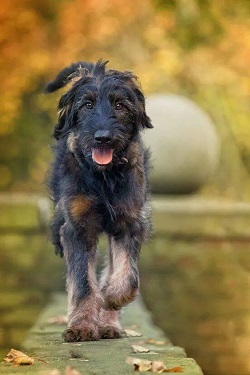
photo courtesy of Nicole Welsch – German Breeder
When looking at Shepadoodle puppies for sale, it is wise to locate a good groomer who is familiar with large dogs and Poodle crosses. Regarding their coat, Shepadoodle puppies require the same care as any other dog. Nails and teeth need attention, as do their ears, but neither require breed-specific mention.
After grooming is taken out of the equation, the Shepadoodle is fairly standard. He or she should be given a high-quality large breed dog food, continuous access to water, and plenty of chew toys.
These dogs are not designed for the city, let alone an apartment. They are happiest running hard all day. Large fields are ideal for Shepadoodles as they are prone to obesity and boredom should they be contained in the house for extended periods of time. These dogs require more than a walk, they will need a full out run at least twice a day for 30+ minutes.
 Shepadoodle Breeders or Rescue?
It is important when you are looking at a Shepadoodle for sale to find one who has been thoroughly checked for genetic and temperamental issues.
If you are looking to find Shepadoodle puppies for sale you should seek out a breeder. Plan on bringing a list of questions such as:
-
Are the parents registered? Can you meet them?
While a Shepadoodle is not a purebred dog, the parents being registered means that their parents were put through the rigorous screening to ensure the breed stays true meaning they have less of a chance of having major genetic issues.
-
Do they have any dogs from a previous litter from this pairing?
This will help you get a better idea of the size and temperament your puppy may end up with.
-
What health testing has been done on the parents?
It is always important to know if your puppy is coming from clean lines free of known genetic issues which can cost thousands of dollars at the vet with issues such as epilepsy and hip dysplasia.
-
Is the puppy up-to-date on shots? What about deworming?
This is especially important with larger dogs as they will likely come into contact with many other dogs on their long walks and cannot be confined indoors easily. If a puppy’s parent has worms, the puppy will have worms as well and therefore should be dewormed without question.
-
What health guarantee comes with the puppy? What is involved in the purchase contract?
All reputable breeders will want the best for their Shepadoodle puppies and will want to ensure they stay safe and healthy. The health guarantee is for you, knowing the breeder will take the dog back should there be any issue from their end that was not noticed before the puppy left with you such as Von Willebrand’s Disease – a deficiency which will prevent your dog’s blood from clotting. The purchase contract is for the breeder’s comfort. It is so they know their puppy is not going to end up in the pound, used in a puppy mill or otherwise disposed of. Usual things to include are breeding rights and what happens to the dog should you be unable to care for him or her any longer.
-
What socialization has the puppy had?
This is particularly important with this breed. You want a puppy who has been exposed to other dogs and people so they can learn how to behave properly .
-
What food are they being fed?
This is particularly important so your puppy has familiar food. If a puppy’s diet changes too much, massive indigestion could occur.
Occasionally Shepadoodle breeders will have a retired dog for sale. If you choose this option, you should ask them all the above questions as well as what training has been done with the dog.
If you get your dog from a Shepadoodle rescue you want to ask these questions as well. The rescue should answer as openly as possible. Obviously, due to the nature of a rescue, they probably won’t know about the dog’s previous owners or their lineage. Everything else is important to know to the best of their abilities.
The Shepadoodle is not a dog for beginners, but it is not by any means a mean dog. With the correct family dynamics, training and socialization this is an exceedingly intelligent dog who will thrive on plenty of space, time and attention and in turn will offer you undying loyalty and affection.
* All attributes of the Shepadoodle are only approximations, as the Shepadoodle is a mixed breed and can take on any combination of its ancestral breeds, in this case the German Shepherd and the Poodle and any combination thereof.