

When considering adding a furry member to your family, understanding the growth expectations of the breed can greatly influence your decision. For those of you intrigued by the charming and intelligent Labradoodle, a notable question arises: how big does a Labradoodle get? Whether you’re smitten with the idea of a cuddly mini Labradoodle full grown or you embrace the robust presence of a standard Labradoodle, it’s essential to dive into the specifics of Labradoodle size. This breed, born from the clever crossbreeding of a purebred Poodle and a Labrador Retriever, presents an array of sizes that cater to various lifestyles and living spaces. Through this comprehensive height and weight chart, you will gain vital insights into the developmental milestones—charting the journey from playful pup to regal adult.
Your search for clarity amidst the delightful diversity of this breed ends here. Get ready to discover the factors that shape the size of these endearing companions, ensuring that your Labradoodle fits perfectly into the puzzle of your life.
Key Takeaways
- Labradoodle size varies greatly, from miniature to standard versions, affecting compatibility with your living situation.
- Understand growth patterns with a height and weight chart to predict how big your Labradoodle will get.
- Familiarize yourself with the growth stages from a 1-month-old puppy to a fully matured 2-year-old adult.
- Learn how generational lineage and parent breed sizes contribute to your Labradoodle’s final dimensions.
- Gain insights on ensuring the healthful development of your Labradoodle through proper nutrition and care.
- Grasp the endearing versatility of Labradoodles, making them suitable for a variety of households and lifestyles.
- Prepare for a commitment to regular veterinary care to maintain the well-being of your Labradoodle, irrespective of size.
Understanding the Labradoodle Breed: Origins and Physical Traits
Delving into the fascinating world of Labradoodles requires an exploration of their unique history and physical characteristics. Highly regarded for their companionship and service capabilities, this breed’s lineage combines the best of the Labrador Retriever’s loyalty with the Poodle’s hypoallergenic coat. Here, we’ll take a closer look at how the Labradoodle came to be and what distinctive traits make them the beloved pets they are today.
The History of Labradoodles and Their Purpose
The creation of the Labradoodle breed was a thoughtful response to a practical need: providing a suitable guide dog for individuals with allergic reactions to fur and dander. While labradoodle size and temperament make them excellent service animals, their affectionate and gentle nature has given them a place in households far and wide.
Their journey began in Australia when the first intentional crossbreeding of a Poodle and a Labrador Retriever was choreographed to develop a capable working dog that was also compatible with allergy sufferers. Despite the fact that they are still not recognized by major kennel clubs, the robustness and adaptability of Labradoodles have solidified their reputation as versatile companions.
Appearance and Coat Varieties in Labradoodles
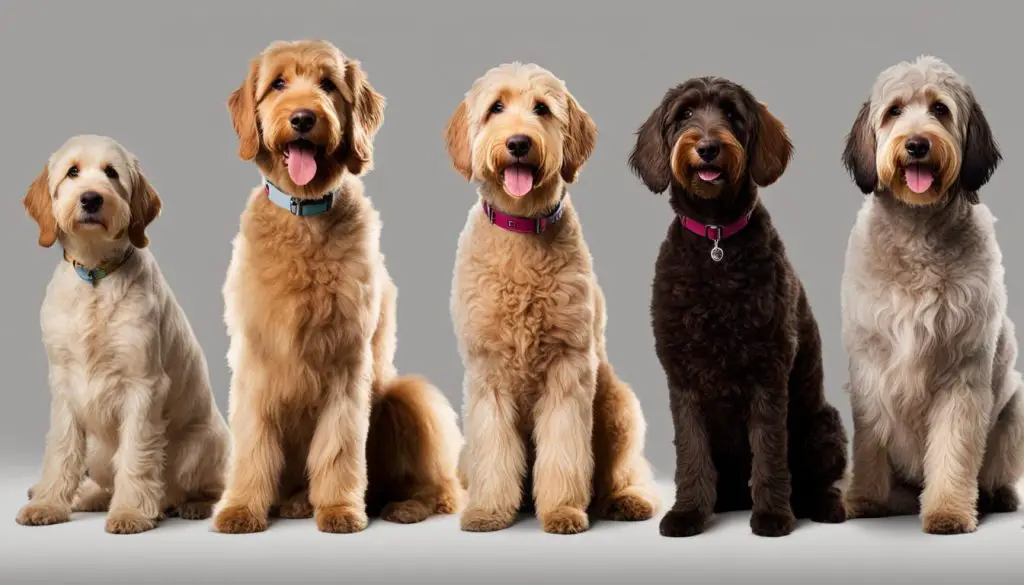
Answering the frequently asked question, “How big are Labradoodles?” can be slightly complex. Their size can range significantly because Labradoodles aren’t a one-size-fits-all breed. They can vary drastically in size and build depending on the generation and size of the Poodle used in breeding.
The small Labradoodle, often the result of blending a Miniature or Toy Poodle with a Labrador, showcases a compact body and an often curly or wavy coat. Meanwhile, standard-sized Labradoodles exude a more stately presence with a sturdy build and athletic prowess, a tendency inherited from both parent breeds.
Their coats can range from wavy to curly and come in a broad spectrum of colors like apricot, cream, and red to silver, black, and chocolate. This variability adds to the uniqueness of each Labradoodle, with no two dogs sporting the exact same appearance.
Whether full-grown or a puppy, the dimensions of a Labradoodle can influence their suitability for different living environments and lifestyles. Those seeking a smaller pet may find the small Labradoodle to be a perfect fit, while others might prefer the larger, more robust standard Labradoodle for an active life.
Deciphering the Labradoodle Growth Chart
Unlocking the future size of your Labradoodle is made easier with the help of a labradoodle growth & weight chart. Such charts provide a valuable reference as you monitor your pet’s maturation, considering averages derived from its lineage. They offer a roadmap for understanding how big labradoodles get and enable you to set realistic expectations regarding their final size. Whether you have a mini labradoodle or a standard variant, growth charts can be an indispensable tool in your puppy care arsenal.
| Age | Weight |
|---|---|
| 1 month old | 3 – 5 lbs |
| 2 months old | 5 – 15 lbs |
| 3 months old | 15 – 22 lbs |
| 4 months old | 22 – 30 lbs |
| 5 months old | 30 – 35 lbs |
| 6 months old | 35 – 40 lbs |
| 7 months old | 40 – 50 lbs |
| 8 months old | 50 – 60 lbs |
| 9 months old* | 50 – 70 lbs |
| 10 months old | 50 – 75 lbs |
| 11 months old | 50 – 80 lbs |
| 12 months old | 50 – 85 lbs |
| 2 years old | 50 – 90 lbs |
* Standard Labradoodles may continue to grow while Medium’s will usually be full grown around 9 months old. Adjust the chart down by approximately a 50% for Mini’s
How the Labradoodle Growth Chart Works
The Labradoodle growth chart functions by correlating the current weight of a puppy with its age to project its adult weight. It factors in the average sizes of the puppy’s parents, particularly the Poodle, given their variable sizes from standard to miniature. The chart helps you to plot your Labradoodle’s size over time and assess whether they are on track for healthy development.
Interpreting Labradoodle Weight Range from Puppy to Adult
Knowing the expected weight range of Labradoodles as they grow is essential for owners. Typically, a Labradoodle puppy can be anywhere from 3 to 5 pounds at one month of age. As they approach adulthood around the 2-year mark, their weight may reach anywhere between 50 and 90 pounds, depending on whether they are a standard or mini Labradoodle. Nevertheless, individual genetics can lead to significant variation, and therefore, the growth chart should be used as a guide rather than an absolute.
Labradoodle Size: A Look into Full-Grown Dimensions
If you’re contemplating welcoming a Labradoodle into your home, understanding their adult size is essential. Both how big do mini labradoodles get and how big do labradoodles get varies widely, influenced by a notable factor: the size variation between the Poodle parents. Mini Labradoodles can exhibit more petite dimensions, whereas the standard Labradoodle can display more considerable heft and height.
While miniature versions are tempting for those with less space, the affectionate and vigorous standard varieties are just as desirable. Here’s a peek into the typical sizes you can expect from these hybrids:
| Labradoodle Type | Weight Range | Height Range (inches) |
|---|---|---|
| Mini Labradoodle | 15 – 25 pounds | 14 – 16 |
| Medium Labradoodle | 30 – 45 pounds | 17 – 20 |
| Standard Labradoodle | 50 – 90 pounds | 21 – 24 |
As you peruse these figures, take note that a Labradoodle’s size is not just a factor of their growth but also a reflection of the rich genetic tapestry they inherit from their Poodle and Labrador parents. In the case of outliers, don’t be surprised to find a standard Labradoodle tipping the scales at around 100 pounds. With such broad potential in size, choosing the right Labradoodle for your family calls for a careful consideration of lifestyle and preferences.
Factors Influencing the Size of a Labradoodle
When embarking on the journey of becoming a Labradoodle owner, understanding which key elements determine their size is essential. It’s not just about asking, “how much is a Labradoodle?” It’s more about recognizing how generations and parent breeds shape your mini Labradoodle or standard-sized buddy.

Impact of Labradoodle Generations on Size
With each Labradoodle generation, a new blueprint for potential size is forged. The lineage categories—F1, F1B, F2, and beyond—tell a story of genetic mixing, where certain traits from Poodles and Labrador Retrievers are passed down. As you might anticipate, the assorted blends have direct implications for whether you’ll have a small Labradoodle companion or a larger furry friend romping around your home.
The Role of Parental Breeds in Determining Labradoodle Size
Now, let’s delve into the fascinating intricacies of how Labradoodle parents influence their offsprings’ stature. If the lure of a smaller, apartment-friendly mini Labradoodle has caught your eye, then looking at the parental Poodle size could give you clues to your pup’s future dimensions.
| Generation | Parental Breed Ratio | Expected Size |
|---|---|---|
| F1 | 50% Poodle / 50% Labrador | Variable, often medium to standard |
| F1B | 75% Poodle / 25% Labrador | Smaller tendency, includes mini labradoodles |
| F2 | Varies (second generation mix) | Range similar to F1, more unpredictability |
| Multi-Generational | Diverse mix, often more Poodle than Labrador | Breeder-led, often leans towards mini or small Labradoodle |
In summary, the genetic dance between Poodle and Labrador Retriever sets the stage for a diverse range of Labradoodle sizes. Whether your heart is set on a cuddly mini Labradoodle or you’re curious about a larger variant, their genetics hold the key. And while their size may sway your decision, remember that each Labradoodle, regardless of stature, brings a unique blend of joy and companionship to your life.
Ensuring Your Labradoodle’s Health and Well-being
As the proud owner of a Labradoodle, you’re likely wondering “how big do labradoodles get” and how to best facilitate their growth. It’s crucial to understand that the size—a key aspect of a labradoodle’s size—and well-being of your furry friend are deeply rooted in their early care. Adequate nutrition and an awareness of genetic health predispositions play integral roles in the development of a standard Labradoodle.
Nutritional Guidelines for Optimal Growth
The first six months of a Labradoodle’s life are pivotal for their growth. This period demand a balanced diet rich in essential nutrients. High-quality puppy food formulated for large breeds is recommended, to ensure that the pace of their development doesn’t lead to musculoskeletal issues in the future. Below you’ll find a table of key nutrients your Labradoodle requires for peak health.
| Nutrient | Benefits | Food Sources |
|---|---|---|
| Protein | Supports muscle growth and repair | Meats, legumes, eggs |
| Fats | Provides energy; maintains healthy skin and coat | Fish oils, flaxseeds, poultry fat |
| Calcium | Vital for strong bones and teeth | Dairy products, fortified foods |
| Omega-3 Fatty Acids | Supports brain development; anti-inflammatory | Fish, algae oils, flaxseeds |
Understanding Genetic Health Conditions and Preventative Care
Labradoodles may inherit health conditions common to their parent breeds, such as Addison’s disease, hypothyroidism, and especially hip dysplasia—a significant concern because it could affect the standard labradoodle size and mobility. Early detection through regular veterinary screenings is key to managing these conditions. It’s worth considering pet insurance as a financial safety net for any treatments that may be necessary, such as those for hip dysplasia, which can be quite costly. Commit to annual check-ups and stay vigilant for any signs of discomfort in your pet.
Conclusion
As we pull together the threads of our exploration into the diverse world of Labradoodles, it’s evident why these amiable dogs have captured the hearts of so many. With their intelligence and adaptability, they’ve proven to be more than just pets; they’re devoted companions suitable for a wide range of living situations. Your journey to understanding how much is a Labradoodle encompasses more than just the financial aspect—it’s an investment in the joy and companionship that comes with adding a furry friend to your family.
Whether you’re leaning towards a cuddly Mini Labradoodle or the larger, equally lovable Standard Labradoodle, remember that charts and predictions are mere tools to assist you. Each Labradoodle is a unique individual, with growth and size influenced by their distinctive genetic blueprint and the care you provide. A steadfast commitment to nutrition and health care will go a long way in ensuring that your Labradoodle thrives, providing you with the cherishable moments and lasting bonds that make every effort worthwhile.
In pursuing the best for your Labradoodle, regardless of size, you’re also nurturing their potential to be an endearing part of your daily life. Commit to regular veterinary visits and early detection of health issues, and take proactive steps towards their wellbeing. Your Labradoodle’s size will ultimately be a product of love, care, and the innate characteristics that make them who they are—an irreplaceable member of your family, impacting your life far beyond their physical stature.
FAQ
How big does a Labradoodle get?
The size of a Labradoodle can vary greatly, but they typically range from 21 to 24 inches in height at the withers and weigh between 50 to 90 pounds when fully grown. Some Labradoodles, particularly those with standard-size Poodle lineage, can weigh as much as 100 pounds.
What are the different sizes of Labradoodles?
Labradoodles are often categorized by size as mini, medium, or standard. A mini Labradoodle full grown typically stands 14 to 16 inches tall and weighs 15 to 25 pounds. Medium Labradoodles can range from 17 to 20 inches in height and 30 to 45 pounds in weight. Standard Labradoodles are the largest, typically growing to 21 to 24 inches tall and weighing 50 to 90 pounds.
How can I predict my Labradoodle’s full-grown size?
While predicting the exact full-grown size of a Labradoodle can be challenging due to genetic variation, a Labradoodle growth chart can serve as a rough guide. Factors like the size of the Poodle parent and generational lineage (F1, F1B, etc.) also play a role. It’s best to consult with your breeder and vet as they can provide insights based on your individual dog’s genetics and health.
How big do mini Labradoodles get?
Mini Labradoodles typically grow to be about 14 to 16 inches tall at the shoulder and weigh between 15 to 25 pounds when fully grown. Their size is influenced by the fact that they are usually bred from a miniature Poodle parent.
How much does a Labradoodle cost?
The cost of a Labradoodle puppy can vary widely depending on factors such as breeder reputation, location, lineage, and coat colors. On average, you might expect to pay anywhere from $1,200 to $3,000 for a Labradoodle, with some breeders charging even more for select lineages or specific traits.
What kind of coat varieties are there in Labradoodles?
Labradoodles can have a range of coat types including wool (similar to a Poodle’s curly coat), fleece (soft and wavy), and hair (straighter and more similar to a Labrador Retriever’s). They come in a variety of colors, from cream and apricot to red, chocolate, and even parti-colors.
What are the nutritional guidelines for optimal Labradoodle growth?
To ensure optimal growth, Labradoodles require high-quality, age-appropriate dog food that meets their nutritional needs. Puppies require more protein and calorie-dense food to support their rapid growth, while adults need a well-balanced diet. It’s important to follow feeding guidelines based on your dog’s age, weight, and activity level, and consult your veterinarian for personalized advice.
What genetic health conditions should Labradoodle owners be aware of?
Labradoodle owners should be aware of potential genetic conditions such as hip dysplasia, Addison’s disease, and hypothyroidism. Working with a reputable breeder who performs genetic testing on their breeding stock can help reduce the risk of these conditions. Regular veterinary check-ups are essential to monitor their health and catch any issues early on.
How do Labradoodle generations impact size?
The generation of a Labradoodle affects its size by determining the genetic mix between Labrador Retriever and Poodle traits. An F1 Labradoodle is a first-generation cross (50% Poodle, 50% Labrador), while an F1B is backcrossed and usually has more Poodle genes (75% Poodle, 25% Labrador), often resulting in a smaller dog. Multigenerational crosses can further refine the size, coat type, and other traits.
Can you predict a Labradoodle’s size based on its parents?
Yes, the size of a Labradoodle’s parents, especially the Poodle one, can give a good indication of the potential size of their offspring. However, genetics can be unpredictable, and an individual Labradoodle’s size may vary. It’s best to discuss with the breeder about the sizes of both parents for a more accurate expectation of a puppy’s grown size.