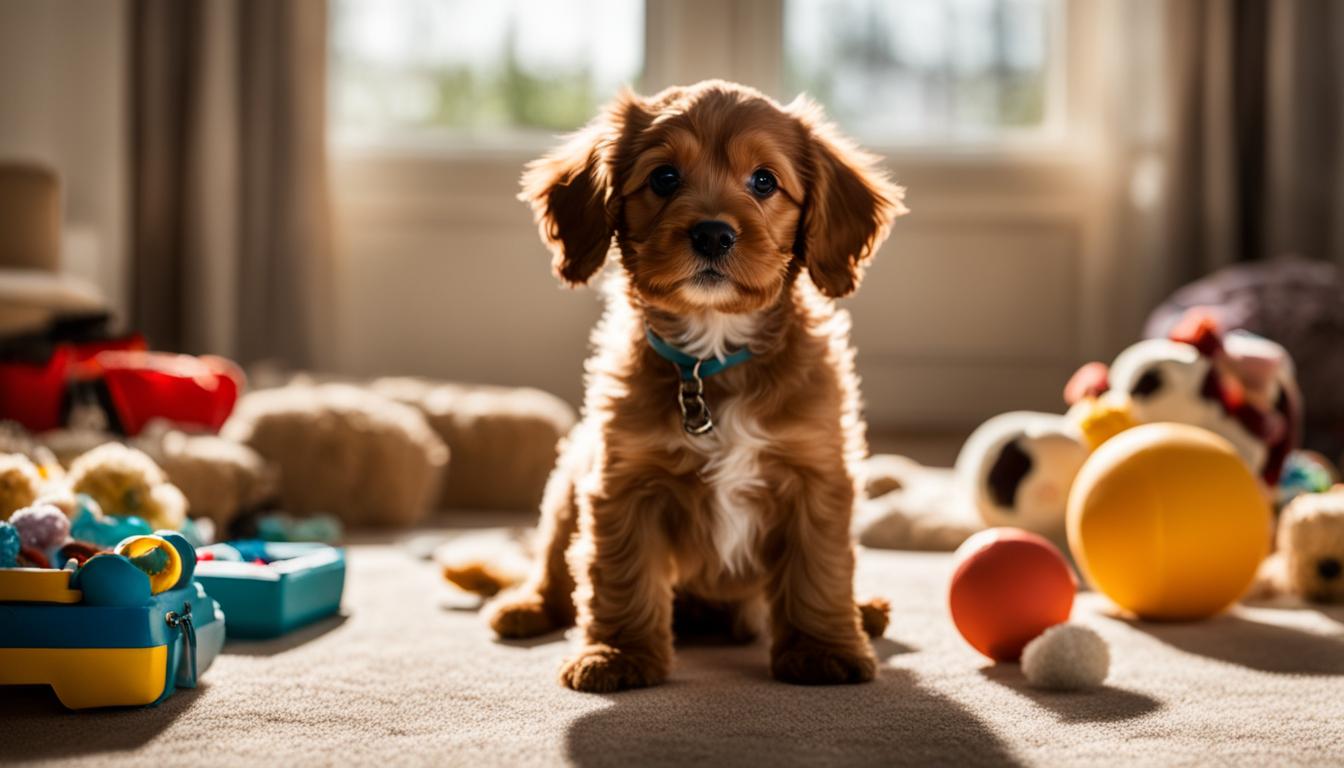

Welcome to our comprehensive guide on training your Cavapoo. As a popular breed in the US, Cavapoos require timely and consistent training to ensure they grow into well-rounded and well-behaved adult dogs. By starting their training early and implementing effective techniques, you can foster a strong bond with your Cavapoo while instilling obedience and good behavior.
Setting a daily routine is crucial for your Cavapoo’s development. Consistency in mealtimes, potty breaks, and playtime helps establish healthy boundaries and structure. Positive reinforcement is the key to successful training. By rewarding desired behaviors and ignoring unwanted ones, you can shape your Cavapoo’s behavior effectively.
Key Takeaways:
- Training your Cavapoo early on is crucial for their development.
- A daily routine helps establish boundaries and structure.
- Positive reinforcement is the key to successful training.
- Effective training techniques include crate training, clicker training, and mirror training.
- Common behavior issues in Cavapoos can be addressed through proper training and socialization.
When to Start Training Your Cavapoo Puppy
Training your Cavapoo puppy is vital for their development and future behavior. It is recommended to start training your puppy as soon as you bring them home. By starting early, you can lay the foundation for a well-behaved and obedient adult Cavapoo. Many ethical breeders begin introducing basic training concepts, such as crate training, potty training, leash walking, and basic manners, to their puppies at an early age.
Consistency is key when it comes to training your Cavapoo puppy. Establishing a daily routine that includes specific mealtimes, potty breaks, playtime, and nap times helps them understand boundaries and structure. This routine assists in creating a well-adjusted and disciplined puppy.
Young puppies have shorter attention spans, so keeping training sessions short and engaging is important. As your puppy grows older, their attention span will increase, making training easier. As long as you stick to the routine and provide positive reinforcement, your Cavapoo will quickly learn and respond to your training efforts.
Tips for Successful Puppy Training
- Start training your Cavapoo puppy as soon as you bring them home
- Introduce basic training concepts, such as crate training, potty training, leash walking, and basic manners
- Establish a daily routine with specific mealtimes, potty breaks, playtime, and nap times
- Keep training sessions short and engaging to accommodate their short attention spans
- Use positive reinforcement to reward desired behaviors and encourage progress
Remember that puppies between 8 and 12 weeks old require smaller and more frequent meals, leading to more frequent potty breaks. By adhering to a consistent training schedule and providing proper guidance, you can ensure that your Cavapoo puppy becomes a well-behaved and obedient companion.
Training your Cavapoo puppy is crucial for their development and future behavior. Start early and be consistent with your training efforts to establish good habits and create a strong bond with your furry friend.
Proven Training Techniques for Cavapoos
When it comes to training your Cavapoo, positive reinforcement is a highly effective method. By rewarding good behaviors and ignoring unwanted ones, you can shape your Cavapoo’s behavior in a positive and respectful way.
One popular technique is clicker training. This form of positive reinforcement involves associating a clicking sound with a reward to reinforce desired behaviors. It helps your Cavapoo understand the exact moment they exhibit the desired behavior.
Clicker training is a powerful tool in the hands of a dedicated Cavapoo owner. By pairing the clicker sound with rewards like treats or praise, your Cavapoo will quickly associate the sound with positive outcomes. This creates a strong incentive for them to repeat the desired behaviors.
Crate training is another valuable method for Cavapoo training, especially when it comes to potty training. By providing a comfortable and secure space for your Cavapoo, their crate becomes a safe haven they can retreat to. It also helps in preventing accidents and teaches them to hold their bladder.
Another innovative training technique is mirror training. By combining positive reinforcement and clicker training, you can teach your Cavapoo to mimic your actions. This strengthens the bond between you and your furry companion, ensuring effective communication and understanding.
The Benefits of Mirror Training
Mirror training allows your Cavapoo to observe and mimic your behaviors, gestures, and commands. This helps them learn new behaviors and tricks more quickly, as they are able to visually understand what you want from them. Additionally, mirror training promotes socialization and confidence, as your Cavapoo gains a sense of accomplishment from successfully imitating you.
Overall, these proven training techniques – positive reinforcement training, clicker training, crate training, and mirror training – provide effective methods for training your Cavapoo. By incorporating these techniques into your training routine, you can build a strong bond with your Cavapoo and establish clear communication.
| Training Technique | Description |
|---|---|
| Positive Reinforcement Training | Rewarding good behaviors and ignoring unwanted behaviors to shape behavior through positive reinforcement. |
| Clicker Training | Associating a clicking sound with a reward to reinforce desired behaviors, creating a strong incentive for repetition. |
| Crate Training | Using a crate as a safe space for your Cavapoo, aiding in potty training and providing a comfortable and secure environment. |
| Mirror Training | Combining positive reinforcement and clicker training to teach your Cavapoo to mimic your actions, strengthening the bond and improving communication. |
By utilizing these Cavapoo training methods, you can ensure that your furry friend grows up to be a well-behaved and obedient companion.
Common Behavior Issues in Cavapoo Training
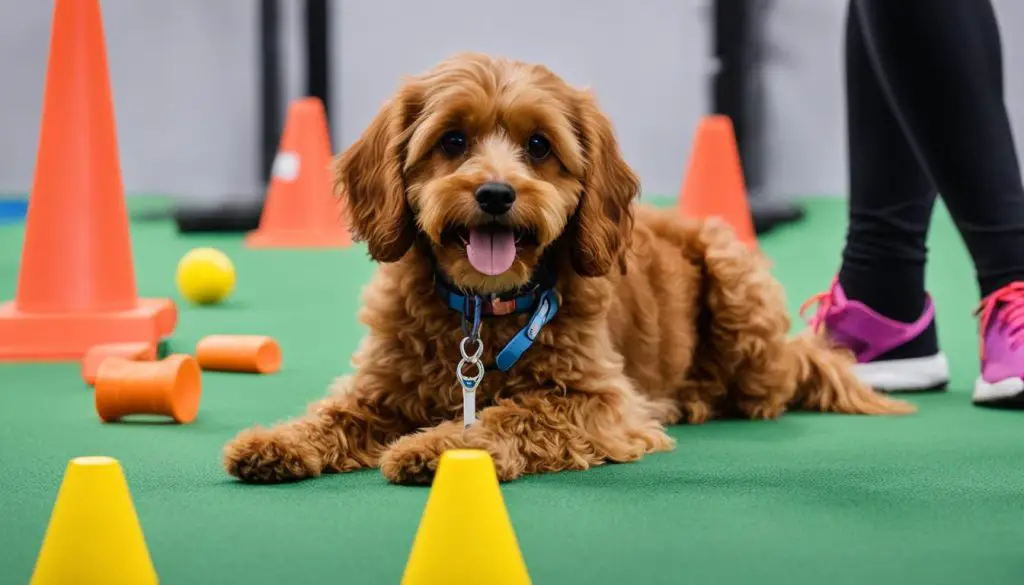
Training a Cavapoo can come with its own set of challenges, as every dog has its own unique personality. It’s important to be aware of and address common behavior issues that may arise during the training process. Understanding how to effectively manage and modify these behaviors is essential for creating a well-behaved and happy Cavapoo companion.
Counter Surfing
One behavior issue that many Cavapoo owners may encounter is counter surfing. Cavapoos are curious by nature and may try to swipe food or other items from kitchen counters. To prevent this behavior, it’s important to keep counters clean and free of tempting objects. Additionally, teaching your Cavapoo good manners and providing alternative activities or toys can help redirect their attention away from the counters.
Jumping on People
Another behavior issue that Cavapoo owners often face is jumping on people. While it may be cute when they are puppies, it can quickly become a nuisance when they grow larger. Proper socialization is key to addressing this behavior. Teach your Cavapoo to sit and be greeted calmly, rewarding them for appropriate behavior. Consistency and positive reinforcement will help them learn to greet people politely.
Excessive Barking
Excessive barking is a behavior issue that can be quite disruptive for both the owner and those around them. Cavapoos are known to be vocal dogs, but with proper training, you can manage their barking effectively. Positive reinforcement training techniques, such as rewarding your Cavapoo for being quiet, can be helpful. Understanding the underlying reasons for their barking, such as boredom or anxiety, can also guide you in addressing this behavior issue.
Puppy Biting
Puppy biting is a natural behavior for Cavapoos, as they explore their surroundings and learn boundaries. However, it’s important to redirect this behavior and teach bite inhibition. Providing appropriate chew toys and discouraging biting humans through positive reinforcement can help your Cavapoo learn appropriate play behaviors. Consistent training and patience are crucial in addressing this behavior.
By addressing these common behavior issues through consistent training and positive reinforcement, you can cultivate a well-behaved Cavapoo companion. Remember to be patient and persistent in your training efforts, and always seek professional guidance if needed.
| Common Behavior Issues | Management Techniques |
|---|---|
| Counter Surfing | Keep counters clean and clear of tempting items. Teach good manners and provide alternative activities or toys. |
| Jumping on People | Socialize your Cavapoo and teach them to sit calmly when greeting. Reward appropriate behavior. |
| Excessive Barking | Use positive reinforcement training techniques to reward quiet behavior. Understand the underlying reasons for barking. |
| Puppy Biting | Provide appropriate chew toys and discourage biting humans. Teach bite inhibition through positive reinforcement. |
Housebreaking Your Cavapoo: Tips for Success
Housebreaking your Cavapoo is an essential part of their training. It requires consistency, patience, and the right techniques to ensure success. By following these housebreaking tips and methods, you can effectively potty train your Cavapoo and establish good habits.
Consistency and Patience
Consistency is key when housebreaking your Cavapoo. Establish a routine for potty breaks and stick to it. Take your puppy to their designated potty area at regular intervals throughout the day. Be patient, as housebreaking takes time and accidents may happen. Reward your puppy for using the designated area and avoid punishing them for accidents.
Choosing the Right Method
There are different housebreaking methods that you can choose from, depending on your preferences and living situation:
- Outdoor training: Take your Cavapoo outside to a designated potty area and reward them for going in the right place.
- Crate training: Use a crate to create a den-like space for your puppy. Take them outside immediately after letting them out of the crate.
- Paper training: Use newspapers or puppy pads in a designated area indoors. Gradually move the papers closer to the door and eventually outside.
- Potty pad training: Use specially designed potty pads in a specific area indoors. Gradually move the pads closer to the door and eventually outside.
- Litter box training: Train your Cavapoo to use a litter box with cat litter or special dog litter.
- Diaper training: Use dog diapers as a temporary solution until your puppy learns to hold their bladder and can be taken outside.
Choose the method that suits your lifestyle and living situation best. Each method requires consistency and positive reinforcement to ensure success.
Managing Accidents
Accidents may happen during the housebreaking process. It’s important to manage them effectively and prevent future accidents:
- Clean accidents thoroughly: Use an enzymatic cleaner to remove any traces of urine or feces. This helps eliminate any lingering scent that may encourage your puppy to go in the same spot again.
- Identify triggers and temptations: Keep track of what triggers your puppy to have accidents. It could be certain times of the day, specific locations, or situations. Avoid these triggers and manage them effectively.
- Supervise and restrict access: Keep a close eye on your puppy and restrict their access to certain areas of the house until they are fully housebroken.
- Be patient and consistent: Stay committed to the housebreaking routine and continue to reinforce positive behaviors.
Remember: Housebreaking is a process that requires time and effort. Stay consistent, be patient, and reward your Cavapoo for their progress. With proper training and positive reinforcement, your Cavapoo will become a well-behaved and housebroken member of your family
Conclusion
Training your Cavapoo requires time, patience, and consistency. By starting training early and establishing a routine, you can shape your puppy’s behavior and pave the way for a well-behaved adult Cavapoo. Utilizing proven training techniques such as positive reinforcement and crate training, you can effectively teach desired behaviors and address any behavior issues that may arise.
Housebreaking is an essential aspect of Cavapoo training, and it can be achieved by employing consistent methods and establishing a clear routine. By following these training principles, you can successfully teach your Cavapoo to use designated areas for potty breaks, ensuring a clean and well-mannered living environment.
For comprehensive guidance and resources in training your Cavapoo, the Cavapoo Lovers Training Course offers valuable tools to assist you on your training journey. With dedication and the right techniques, you can create a strong bond with your Cavapoo and have a well-trained and obedient companion by your side.
FAQ
What is the best age to start training my Cavapoo puppy?
It is recommended to start training your Cavapoo puppy as soon as you bring them home. Many ethical breeders start introducing puppies to crate training, potty training, leash walking, and basic manners early on.
What training techniques are effective for Cavapoos?
Positive reinforcement training, clicker training, crate training, and mirror training are proven techniques for training Cavapoos. These methods focus on building a strong bond with your Cavapoo and establishing clear communication.
How can I address common behavior issues in Cavapoo training?
Common behavior issues in Cavapoo training include counter surfing, jumping on people, excessive barking, and puppy biting. These issues can be addressed through proper training, socialization, and positive reinforcement techniques.
What are some tips for housebreaking my Cavapoo?
Consistency and patience are key in successfully housebreaking your Cavapoo. Different methods such as outdoor training, crate training, and potty pad training can be used. Establishing a routine and rewarding your puppy for using the designated area will help reinforce the desired behavior.
What resources can help with Cavapoo training?
The Cavapoo Lovers Training Course offers a comprehensive guide to training your Cavapoo, including housebreaking and addressing common behavior issues. It provides valuable resources and guidance for successful Cavapoo training.
Source Links